What does Store Console replace?
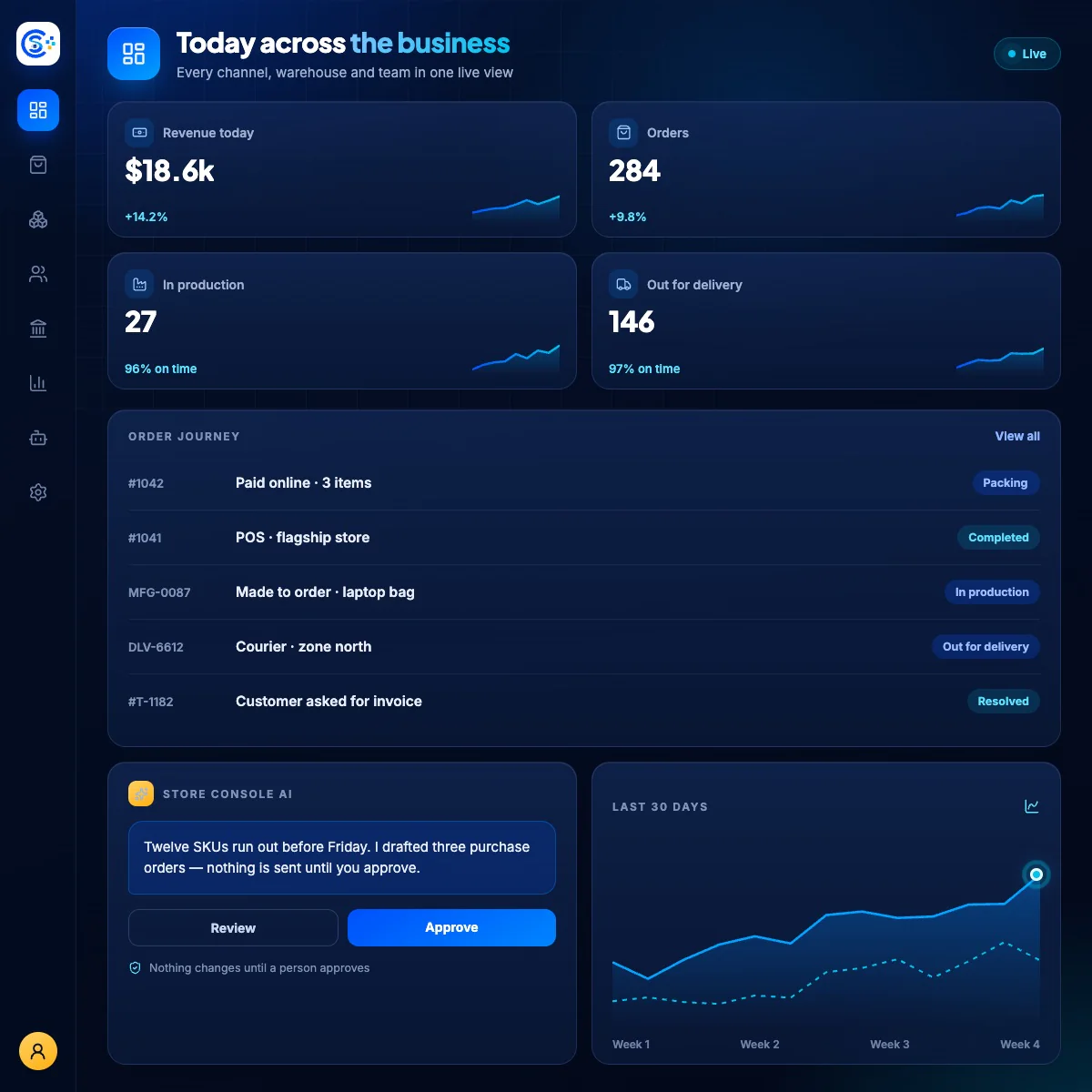
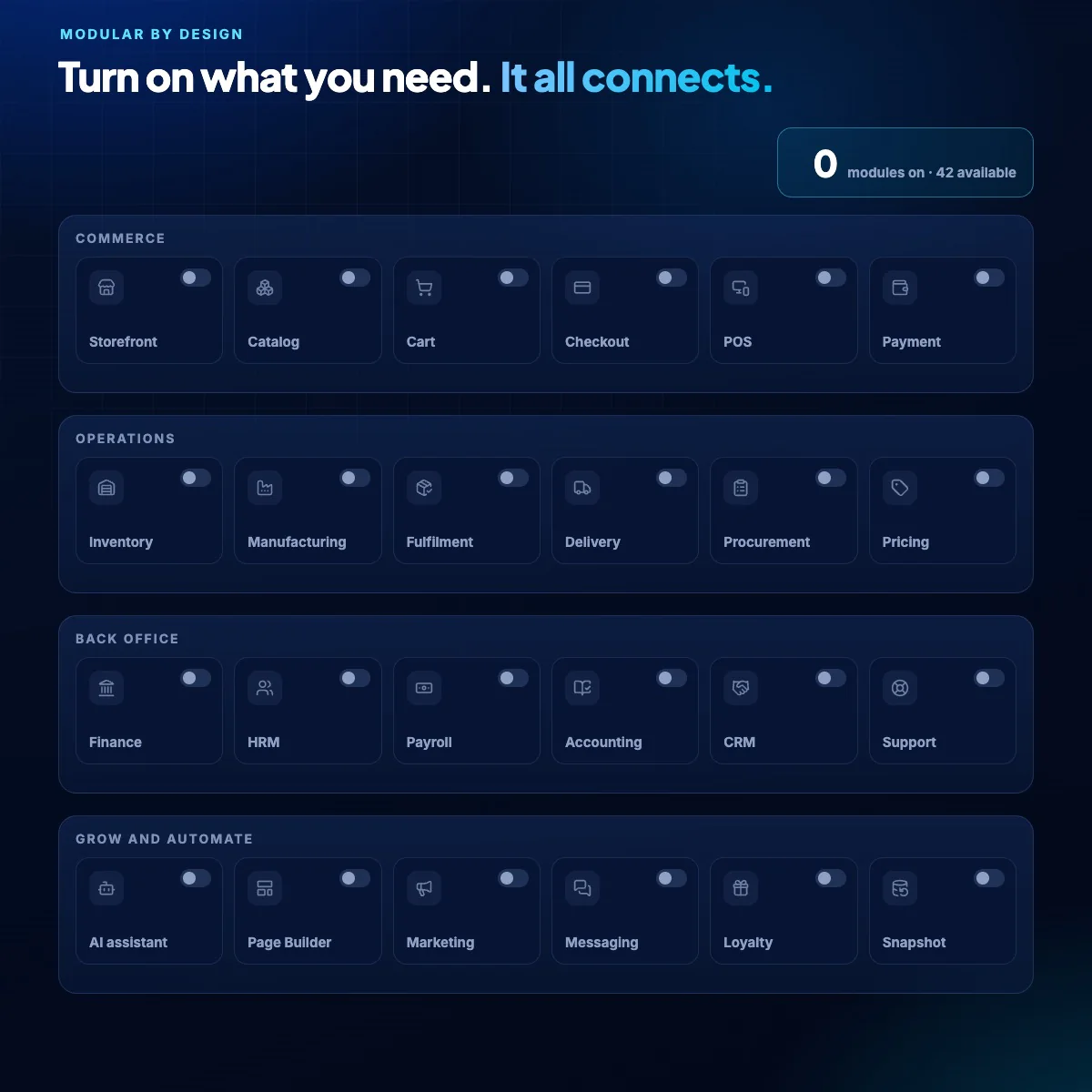
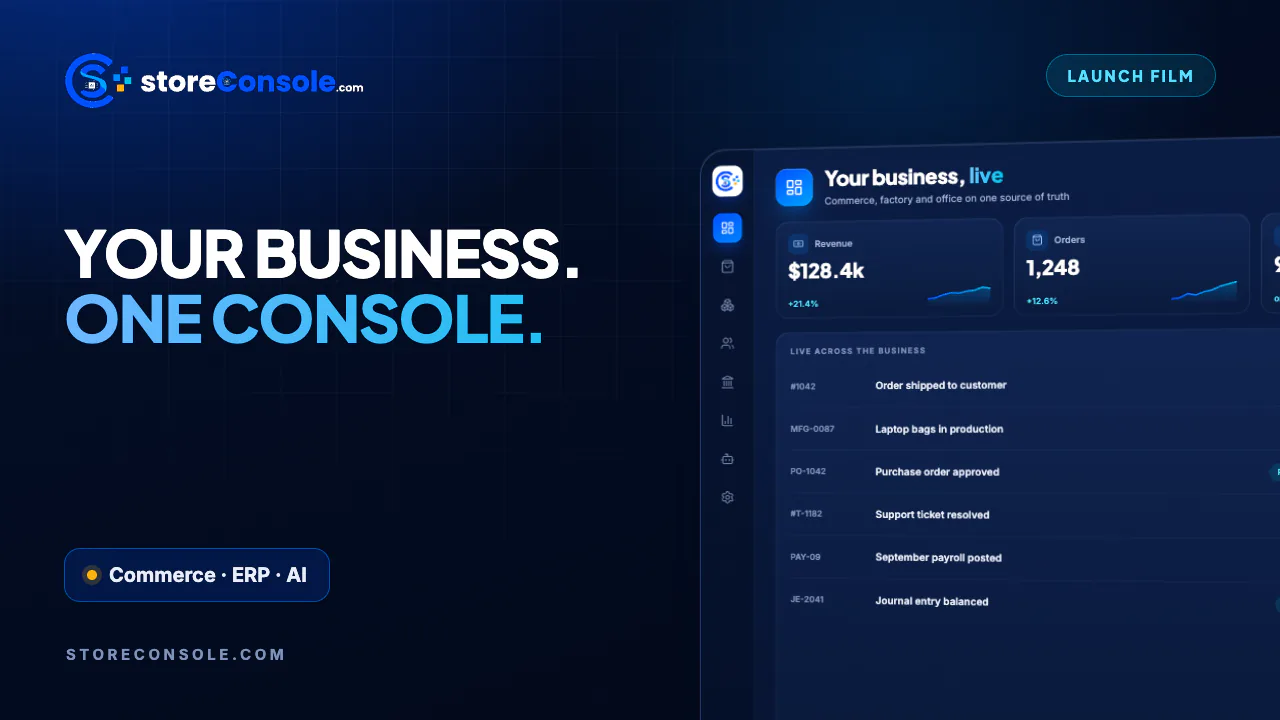
It brings the operating path into one self-hosted console: commerce, POS, inventory, procurement, fulfilment, delivery, CRM, finance, people operations, manufacturing, accounting, and accountable AI assistance. Activate only the modules your business needs.
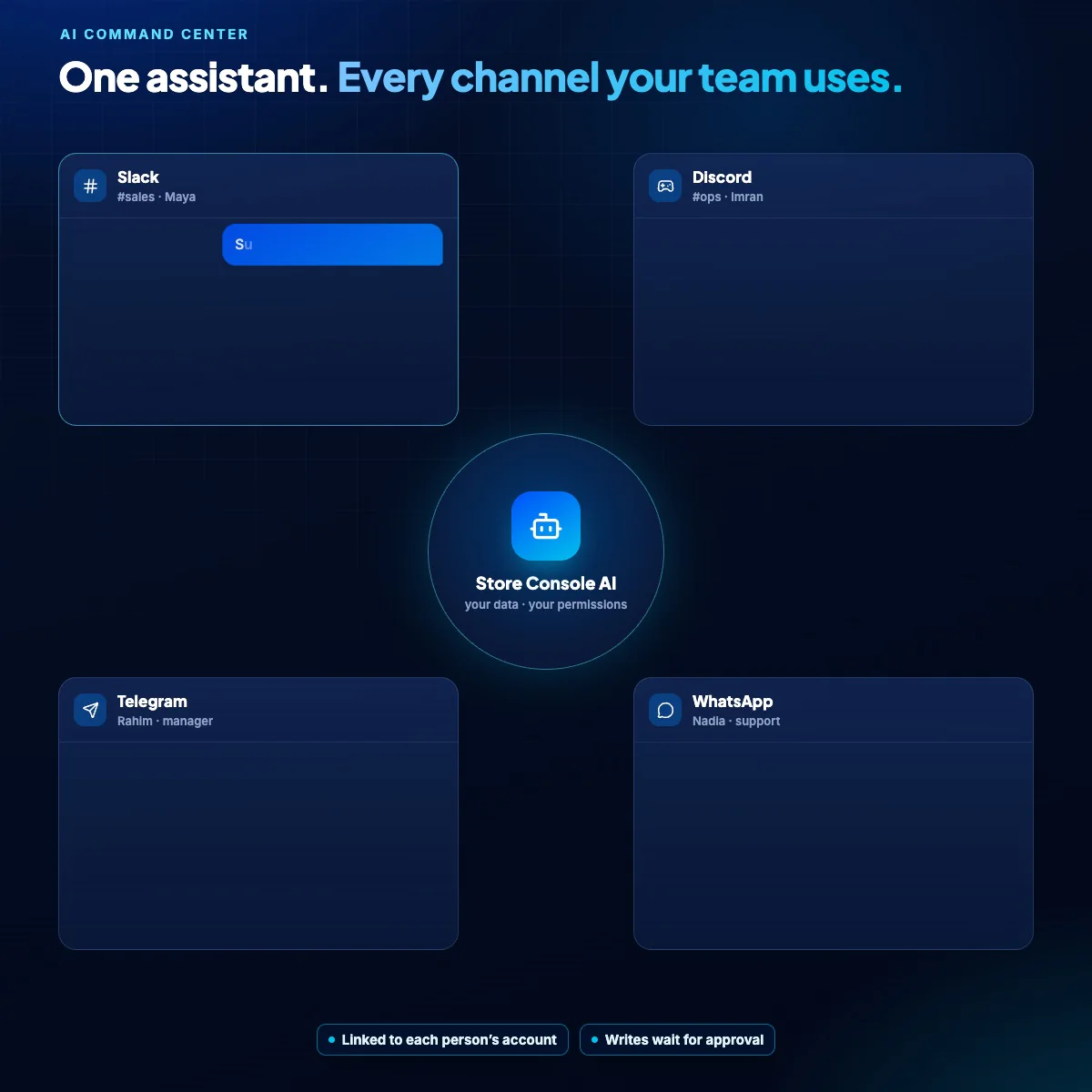
Can I control Store Console from Telegram, Slack, WhatsApp, or Discord?
Yes. Link the channel identity to a Store Console user. The available AI tools follow that user’s permissions, and supported write actions require explicit confirmation before execution.
Does the AI have unrestricted admin access?
No. It reads and proposes only through registered tools. Permission filters apply to the linked user, while create, update, and delete operations remain confirmation gated.
How is Store Console delivered?
Instantly and automatically. As soon as the order is paid or the trial starts, your licence key and download appear in your account and in your inbox. You install it yourself with the documented installer and activate it with the key — no call, no manual setup, no waiting.
How does the 14-day trial work?
A payment method is required to activate the trial, but the checkout amount is $0. Cancel before day 15 and nothing is charged. The first paid renewal remains protected by the published 30-day money-back policy.
What does Store Console cost?
Plans begin at $5/month. Commerce, ERP, complete-platform caps, billing cycles, site tiers, cart totals, and lifetime pricing are calculated in the dedicated pricing builder from the current catalog model.
Why are there 42 modules but fewer pricing choices?
The 42 modules are the complete platform architecture: commerce, ERP, manufacturing, AI and content, plus platform governance. Pricing groups that architecture into a smaller set of understandable commercial choices, while the detailed builder shows exactly which billable capabilities are active.
Is Store Console genuinely self-hosted?
Yes. You deploy the application and its data services on infrastructure you control, with documented Docker and bare-metal paths.
What server does it need?
Two vCPU and 4 GB of RAM for evaluation, four vCPU and 8 GB for a live store with ERP. A live fashion store served 40 shoppers at once with a typical page of about 0.4 s on 2 vCPU; the performance report has the full test.