 ई-कॉमर्स
Social Media से Sales: Campaign, Scheduling और AI Prompts
Social Hub से content schedule और Meta campaigns review करें। चार AI prompts के साथ ecommerce और ERP records से marketing का असली परिणाम समझें।
Anichur Rahaman2 घंटे पहले7मिनट
एक workshop batch में BOM version, yield, actual consumption, cost और lot traceability समझें। Quantities और unused packaging का पूरा हिसाब।
लेखक
Anichur Rahaman

Workshop की sheet में shea butter 14 kg है, मालिक को 10 मिला। पिछले batch में 4 kg लगा था, issue दर्ज नहीं हुआ। शुक्रवार के लिए 100 jars का वादा है और supplier पूछ रहा है कि एक खास lot किन products में गया। कहानी काल्पनिक है, लेकिन सवाल वास्तविक: क्या बना सकते हैं, क्या इस्तेमाल हुआ, कहाँ गया?
छोटे निर्माता को सिर्फ recipe file नहीं चाहिए। Plan, physical movements, quality decisions और cost में मेल होना चाहिए। Software records जोड़ सकता है; सही capture और differences की जाँच लोगों को करनी होगी। Work order होने से missing movement अपने आप सही नहीं हो जाता।
अगला batch planning/accounting का उदाहरण है, prices बनाए गए हैं। यह validated cosmetic formulation या safety specification नहीं। Approved material से released finished goods तक evidence chain स्पष्ट करना उद्देश्य है।
BOM तय output के components, quantities और units बताता है। Balm base को jars, labels और cartons से अलग रखें। Base का अपना BOM हो सकता है, उसे stock या अलग production में बना सकते हैं। पहले से बना base consume करें तो उसके raw ingredients दोबारा consume न करें।
Approved version, effective date, output basis, conversions और loss convention दर्ज करें। Released work order में वही version या immutable snapshot हो। बाद के edits controlled change हों, history न लिखें। Substitutions और rework की approval/record अलग चाहिए।
BOM version control का एक implementation example Microsoft BOM documentation में है। अपने system का actual approval और consumption व्यवहार जाँचें।
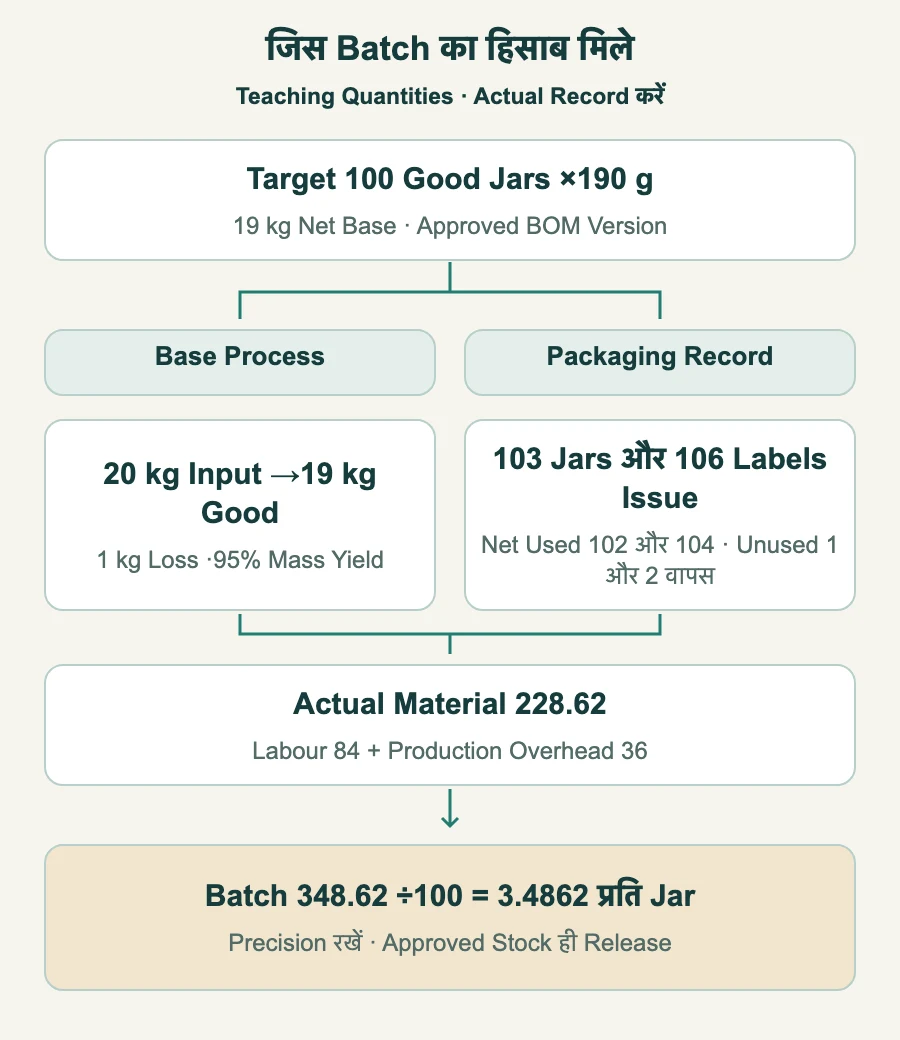
मानें target 100 good jars, हर jar 190 g: net base 19 kg। Normal yield 95% का मतलब input का 5% loss। Required input 19/0.95 = 20 kg , loss 1 kg। 19 में 5% जोड़कर 19.95 मिलेगा, जो 95% yield में 18.9525 kg देता है। Denominator साफ़ रखें, दोनों conventions को समान न कहें।
केवल हिसाब के लिए 20 kg को 55%/35%/10% में बाँटें: shea 11 kg at 8/kg, oil 7 kg at 5/kg, wax 2 kg at 14/kg। Base material cost 88+35+28 = 151 । Packaging plan 103 jars/lids, 106 labels और 9 cartons है, हर carton में अधिकतम 12 jars। Extra packaging allowance है, पूरा इस्तेमाल होने का प्रमाण नहीं।
| Component | Planned Quantity | Actual Net Consumption | Actual Cost |
|---|---|---|---|
| Shea Butter | 11 kg | 11 kg | 88.00 |
| Coconut Oil | 7 kg | 7 kg | 35.00 |
| Beeswax | 2 kg | 2 kg | 28.00 |
| Jar और Lid | 103 units | 102 units | 61.20 |
| Label | 106 units | 104 units | 8.32 |
| Carton | 9 units | 9 units | 8.10 |
Planned material cost 229.38, recorded net consumption 228.62 । Base subtotal 151 को उसके तीन raw-material costs में फिर न जोड़ें। Multi-level BOM में सही stocked/produced stage और actual movements मिलाएँ।
Work order वास्तविक घटना दर्ज करे: 103 empty jars/lids issue, 100 good filled, filling से पहले 2 damaged empty jar/lid kits scrap (इस उदाहरण में दोनों हिस्से write off) और 1 unused वापस। 106 labels में 100 applied, 4 खराब और 2 वापस। सभी 9 cartons इस्तेमाल हुए। 19 kg good output के ऊपर extra rejected filled jars चुपचाप न मानें।
Packaging table issued quantity का हिसाब मिलाती है। Unused stock store में लौटने पर net consumption घटता है। Production location transfer और consumption posting में एक material दो बार deduct न हो। Backflush estimates हों तो actual deviations जल्दी record और reconcile करें।
| Packaging | Issued | Good Output में | Scrap | Unused Returned |
|---|---|---|---|---|
| Jar/Lid Units | 103 | 100 | 2 | 1 |
| Labels | 106 | 100 | 4 | 2 |
Plan 103 jars बनाम net 102 से 0.60 और plan 106 labels बनाम 104 से 0.16 कम लागत। कुल favourable material difference 0.76 । Scrap allowance के भीतर होने से हर variance zero नहीं; quantity, price, output, time और valuation policy भी देखें।
समान material prices, recorded labour 6 hours at 14 और eligible production overhead 6 प्रति hour मानें। Rate teaching assumption है: eligible monthly fixed production cost 1,200 ÷ normal-capacity 200 hours। Six labour hours हमेशा six calendar hours नहीं; cooling, setup, queues और quality release समय बढ़ा सकते हैं।
| Element | Planned Batch | Recorded Batch |
|---|---|---|
| Material | 229.38 | 228.62 |
| Direct Labour | 84.00 | 84.00 |
| Production Overhead | 36.00 | 36.00 |
| Total Batch Cost | 349.38 | 348.62 |
| 100 Good Units: प्रति Unit Cost | 3.4938 | 3.4862 |
Recorded 348.62 ÷100 good units = 3.4862 प्रति jar । Two-decimal display 3.49 है, मगर 3.49×100 = 349,348.62 नहीं। Precision रखें और batch totals मिलाएँ,0.38 rounding difference चुपचाप न डालें। Selling price और gross margin अलग decisions हैं।
हर workshop expense inventory में नहीं जाता। IAS 2 लागू हो तो fixed production overhead normal capacity पर है; abnormal waste और unrelated administration बाहर हैं। देखें adopted IAS 2, paragraphs 12–16। Finance owner से classification और variance treatment तय करें।
यह simple actual-cost example है। Standard-cost या weighted-average system की posting/reconciliation अलग हो सकती है। WIP, material returns, labour और overhead एक बार दर्ज करें; बची quantity/value समझाने पर ही order बंद करें।
Approved free shea 10 kg हो तो 11 kg requirement में 1 kg shortage। Physical on-hand हमेशा released/unreserved नहीं। Incoming lot को receipt और quality release चाहिए हो सकती है। Shortage suggestion approved purchase नहीं; supplier pack shortage से बड़ा हो सकता है।
Friday promise से पहले required dates, supplier lead time, equipment, operators और capacity देखें। Make-to-stock stock plan से, make-to-order customer commitment से trigger है। दोनों साथ चल सकते हैं, मगर material/capacity/quality checks नहीं हटते।
Work order/input lot के अनुसार issue, फिर actual output, loss reasons और unused returns लिखें। Finished lot सही quality status में बने। Completion button unapproved goods को saleable न करे। Recipe approval, substitution, stock adjustment और release role से सीमित हों; reversals का evidence रखें।
Backward: finished lot में कौन input lots, versions और operations? Forward: supplier lot से कौन finished lots, locations और shipments? Splits, merges, rework, outsourcing और returns के links भी रखें। वास्तव में shipped lot के बिना order reference अधूरा है।
Supplier lot flag करे तो affected stock पहचानें और जहाँ उचित हो release रोकें; authorised people के साथ quality/recall procedure करें। Search result पूरा recall नहीं; quantities, missing links, shipments और communication verify करें। Sample drill में speed और completeness मापें, दो queries या instant compliance का वादा न करें।
Product और market के नियम अलग हैं। जैसे FDA food-traceability page में defined foods, entities, exemptions और बदलती dates हैं। Fictional cosmetic batch पर food rule अपने आप लागू नहीं; ERP record अकेला compliance नहीं।
एक product family चुनें, opening stock lot/status से count और conversions validate करें। Real consumption नापकर justified yield/loss basis तय करें। हर process में पुराने batches की तय संख्या पर्याप्त नहीं। BOM owner और change control रखें।
Shortage, unused return, rejected packaging, quality hold और permitted correction वाला पूरा work order चलाएँ। Quantity/cost मिलाकर shipment backward और supplier lot forward trace करें। StoreConsole Manufacturing का enabled workflow verify करें; demo हर integration/quality rule configured होने का प्रमाण नहीं।
मालिक शुरू करने से पहले पूछ सकते हैं कि इस version/output के लिए released material और समय है या नहीं। Close पर broken empty jars, unused return और recorded 3.4862 unit cost समझा सकते हैं। Supplier concern जाँची lot/shipment chain तक पहुँचाता है।
सुधार सही recording habit और gaps ढूँढ़कर ठीक करने के रास्ते में है, screen के सब जानने में नहीं।
समीक्षा: 5 नवंबर 2026 । Anichur Rahaman StoreConsole के निर्माता हैं। Workshop, formulation ratios और costs teaching examples हैं, validated specification नहीं।
लेखक का परिचय
Anichur Rahaman
पढ़ना जारी रखें