 ई-कॉमर्स
Social Media से Sales: Campaign, Scheduling और AI Prompts
Social Hub से content schedule और Meta campaigns review करें। चार AI prompts के साथ ecommerce और ERP records से marketing का असली परिणाम समझें।
Anichur Rahaman2 घंटे पहले7मिनट
समान scope पर पाँच साल की लागत, असली workflow, संचालन की ज़िम्मेदारी और exit test की तुलना करें। कोई model अपने-आप विजेता नहीं है।
लेखक
Anichur Rahaman

मेज़ पर तीन proposals हैं: monthly subscription, custom build और self-hosted licence। पहली invoice से एक सस्ता लगता है। लेकिन दो साल बाद payroll run अटक जाए तो कौन ठीक करेगा? यह समझाने का उदाहरण है, किसी ग्राहक की case study नहीं।
फ़ैसला सिर्फ़ “किराये पर लें, बनाएँ या मालिक बनें” नहीं है। Hosting, billing, implementation और intellectual-property rights अलग बातें हैं। Self-hosted product में annual subscription हो सकता है; custom app में paid services और third-party licences भी। वास्तविक terms और responsibilities की तुलना करें।
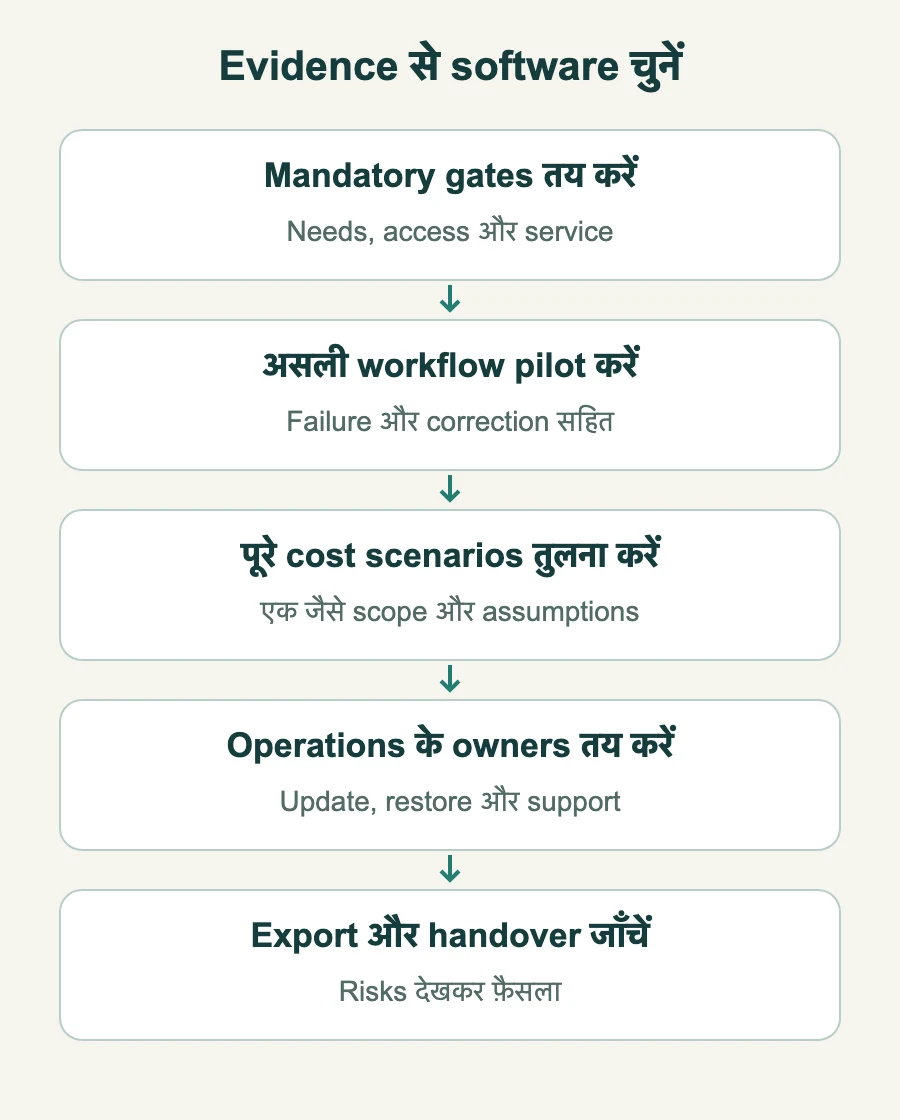
यह 2026 के लिए संतुलित framework है: ज़रूरी workflows साबित करें, तय अवधि की पूरी लागत निकालें और छोड़कर जाने का रास्ता जाँचें। StoreConsole self-hosted product बेचता है, इसलिए commercial interest स्पष्ट है। Framework में SaaS या custom बेहतर हो तो उसे चुनना भी संभव होना चाहिए।
| सवाल | SaaS | Custom build | Self-hosted licence |
|---|---|---|---|
| क्या खरीदते हैं | Provider चलाने वाली service का access | Development और agreed rights/deliverables | Product licence और deployment rights |
| कौन चलाता है | Provider के काम, साथ में अपनी configuration/access duties | Agreement के अनुसार आप, partner या managed services | आप या partner; contract के अनुसार vendor support |
| क्या जाँचें | Usage terms, access, export और recovery | Scope, IP/licences, maintenance और handover | Licence limits, support, operations और exit |
Total cost of ownership यानी TCO में implementation, migration, training, licence, hosting, integration, support और internal work जोड़ें। जहाँ ज़रूरी हो change, recovery और exit costs रखें। पाँच साल यहाँ comparison window है, हर system की तय उम्र नहीं। सभी options में scope, service level और accounting basis बराबर रखें।
नीचे के currency-unit आँकड़े जानबूझकर बनाए गए उदाहरण हैं, vendor quote, market average या StoreConsole की कीमत नहीं। Monthly allowance में संबंधित services और internal labour शामिल हैं। सरल base case में usage और prices स्थिर हैं; tax, financing, inflation और असाधारण downtime शामिल नहीं। असली खरीद मॉडल में लागू खर्च जोड़ें।
| उदाहरण में कुल लागत | साल 1 | साल 3 | साल 5 |
|---|---|---|---|
| SaaS | 18,000 | 42,000 | 66,000 |
| Self-hosted | 22,800 | 44,400 | 66,000 |
| Custom | 54,000 | 72,000 | 90,000 |
Base case में n साल की कुल लागत = one-time implementation + 12 × n × monthly running cost। पाँचवें साल दो product options बराबर हैं क्योंकि assumptions trade-off समझाते हैं, पहले से विजेता नहीं बनाते।
एक assumption बदलें तो ranking बदलती है। Self-hosted में operational support के 300 units महीने के और लगें तो पाँच साल में 18,000 जुड़ेंगे; total 84,000 होगा। SaaS usage या custom feature request किसी और option को बदल सकती है। असली लिखित quotes से low, expected और high scenarios बनाएँ, migration-out cost सहित।
छोटे scope में SaaS जल्दी शुरू हो सकता है, लेकिन access configuration, migration और training फिर भी लगते हैं। Mature self-hosted package भी जल्दी शुरू हो सकता है। छोटा custom pilot और पूरा replacement अलग काम हैं। तय दिनों के वादे के बजाय tested readiness plan की तुलना करें।
हर billing dimension देखें: active users, sites, orders, storage, API calls, payment fees और support। सभी SaaS per-seat नहीं, सभी self-hosted licences flat नहीं। Custom में भी paid components हो सकते हैं। 10 या 15 users के नियम के बजाय अपने growth scenarios पर हिसाब करें।
Data access, export करने की क्षमता और contract के rights अलग रखें। Data location की शर्त हो तो primary store, replicas, backups, logs और support access जाँचें। SaaS या self-hosting सभी obligations अपने-आप पूरे नहीं करते। अपने control के deployment में भी secure access और tested recovery चाहिए।
Custom build असली process gap भर सकता है, लेकिन perfect fit की guarantee नहीं। SaaS और self-hosted दोनों में API, configuration और extensions हो सकते हैं। मुश्किल workflow दिखाएँ, unsupported हिस्से लिखें, change और future maintenance की कीमत लें। कोई universal 80/20 coverage ratio नहीं।
SaaS में infrastructure का ज़्यादा काम provider लेता है, लेकिन access decisions, configuration, data quality और recovery expectations आपकी team की रहती हैं। Self-hosting के लिए patching, monitoring, backups और incidents का तय operator चाहिए। Managed partner काम ले सकता है, पर responsibilities और response times लिखित हों। Update button restore या rollback सफल होने का प्रमाण नहीं।
Sign करने से पहले exit की rehearsal करें। Attachments, history, identifiers और relationships वाला realistic sample export करके दूसरी जगह load करें। Formats, API limits, encryption keys, licence expiry, ongoing access और support handover जाँचें। Database query कर पाना पूरा migration plan नहीं। Custom work में source code, documentation और handover terms भी स्पष्ट चाहिए।
Mandatory requirements पास करने वाले options में छह factors को अपनी priorities के weights दें। 1–5 score के साथ pilot result या contract answer रखें। Weighted average = sum(weight × score) ÷ sum(weights)। ऊँचा average किसी mandatory control का failure नहीं छिपा सकता। Uncertainty लिखें। सुंदर dashboard demo के बजाय partial refund, offline sale या attachments वाला export ज़्यादा उपयोगी pilot हो सकता है।
Hybrid उपयोगी हो सकता है: standard capabilities खरीदें, कुछ components partner से चलवाएँ और अलग मूल्य देने वाला workflow ही बनाएँ। हर boundary पर contract, integration और recovery की ज़िम्मेदारी बढ़ती है। पूरी व्यवस्था support हो सकती है इसलिए चुनें, hybrid अपने-आप श्रेष्ठ नहीं है।
StoreConsole self-hosted, module-based licence प्रति site देता है, प्रति user नहीं। अपने configuration के लिए वर्तमान pricing, licence terms और supported deployment requirements देखें; ऊपर के sample costs हमारी quotation नहीं हैं। प्रकाशित offer में terms के अनुसार 14-day trial और 30-day money-back policy है। Trial में workflow, permissions, export और operational handover जाँचें। नीचे video में plan और checkout journey है।
समीक्षा: 4 नवंबर 2026। Microsoft की shared-responsibility guidance बताती है कि cloud services में data, identity और configuration की ज़िम्मेदारियाँ customer की भी रहती हैं। वास्तविक duties अपने contract में जाँचें। Cost table, sensitivity और scoring method समझाने के उदाहरण हैं; provider pricing या guaranteed savings नहीं।
अनिचुर रहमान सॉफ़्टवेयर आर्किटेक्ट और StoreConsole के संस्थापक हैं। वे बढ़ते कारोबारों के लिए कॉमर्स और ERP सिस्टम डिज़ाइन करते हैं — ख़ास ध्यान event-driven आर्किटेक्चर, डेटा की शुद्धता और अपने सर्वर पर चलने वाले सिस्टम पर।
लेखक का परिचय
Anichur Rahaman
पढ़ना जारी रखें