The reliability of one system, the separation of services.
There is no network hop between modules and nothing to keep in sync. Switch modules on as the business grows; the core never changes.
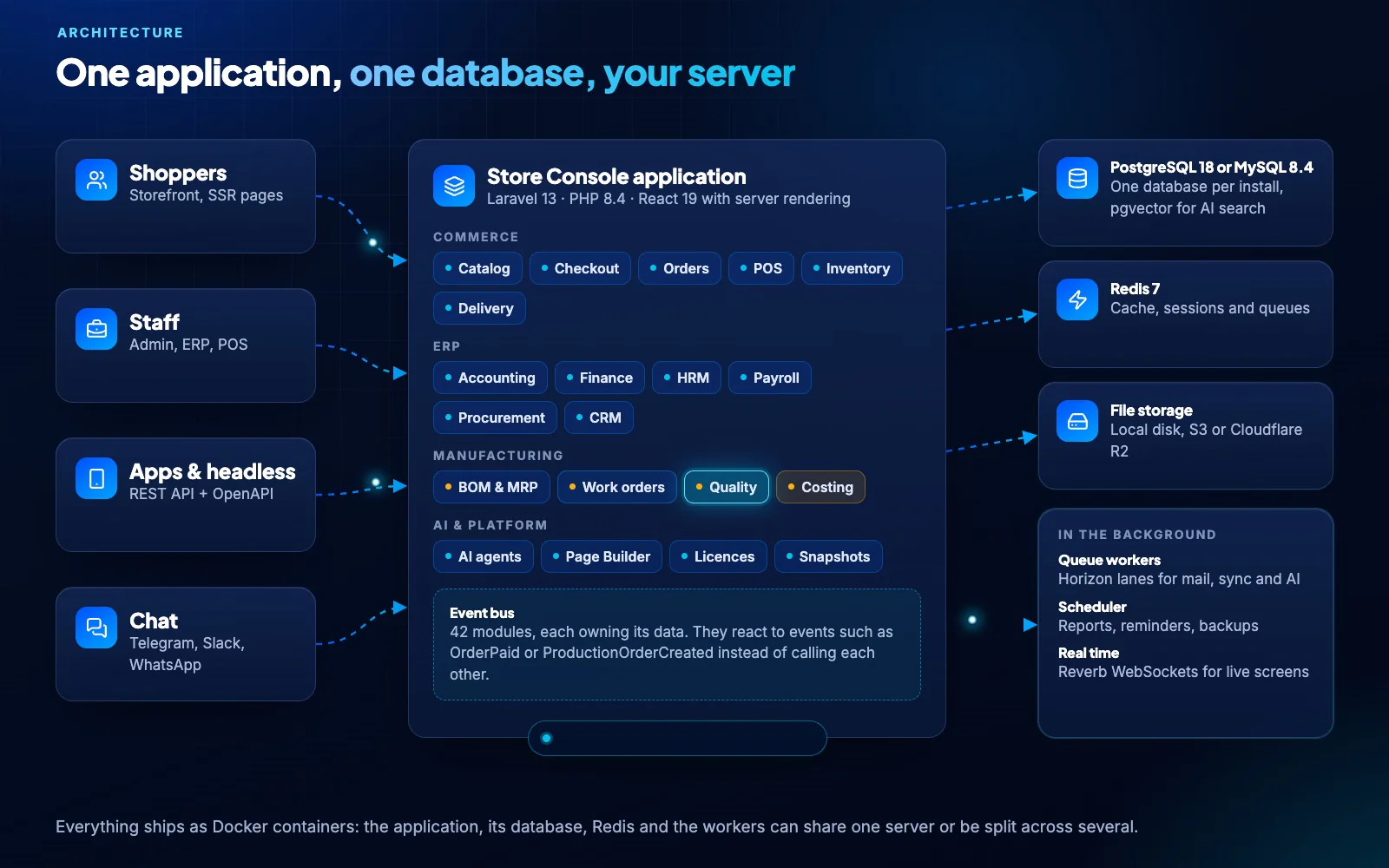
Store Console is a modular monolith: a complete ERP with commerce built in, shipped as one application and one database that you install on infrastructure you own. This page shows how it is built, how it performs and how it keeps your data safe.

42 modules share one codebase, one database and one release, yet each owns its tables, rules and screens. They work together through events such as OrderPaid and StockReserved, so most changes stay inside one module.
There is no network hop between modules and nothing to keep in sync. Switch modules on as the business grows; the core never changes.
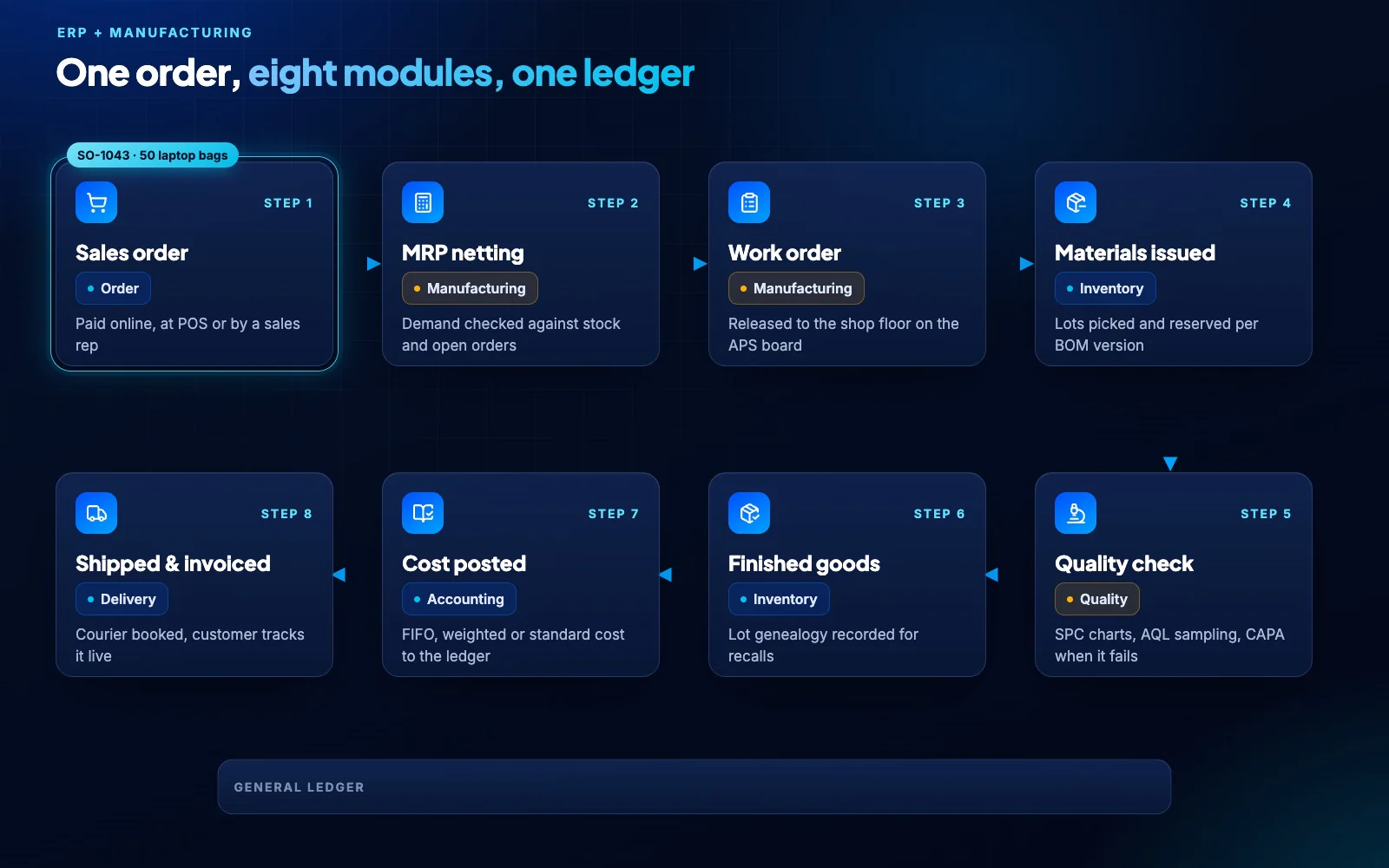
Manufacturing is where most ERPs split into separate products. Here the factory shares the same records as sales, stock and accounts, so planning, the shop floor, quality and costing always agree.

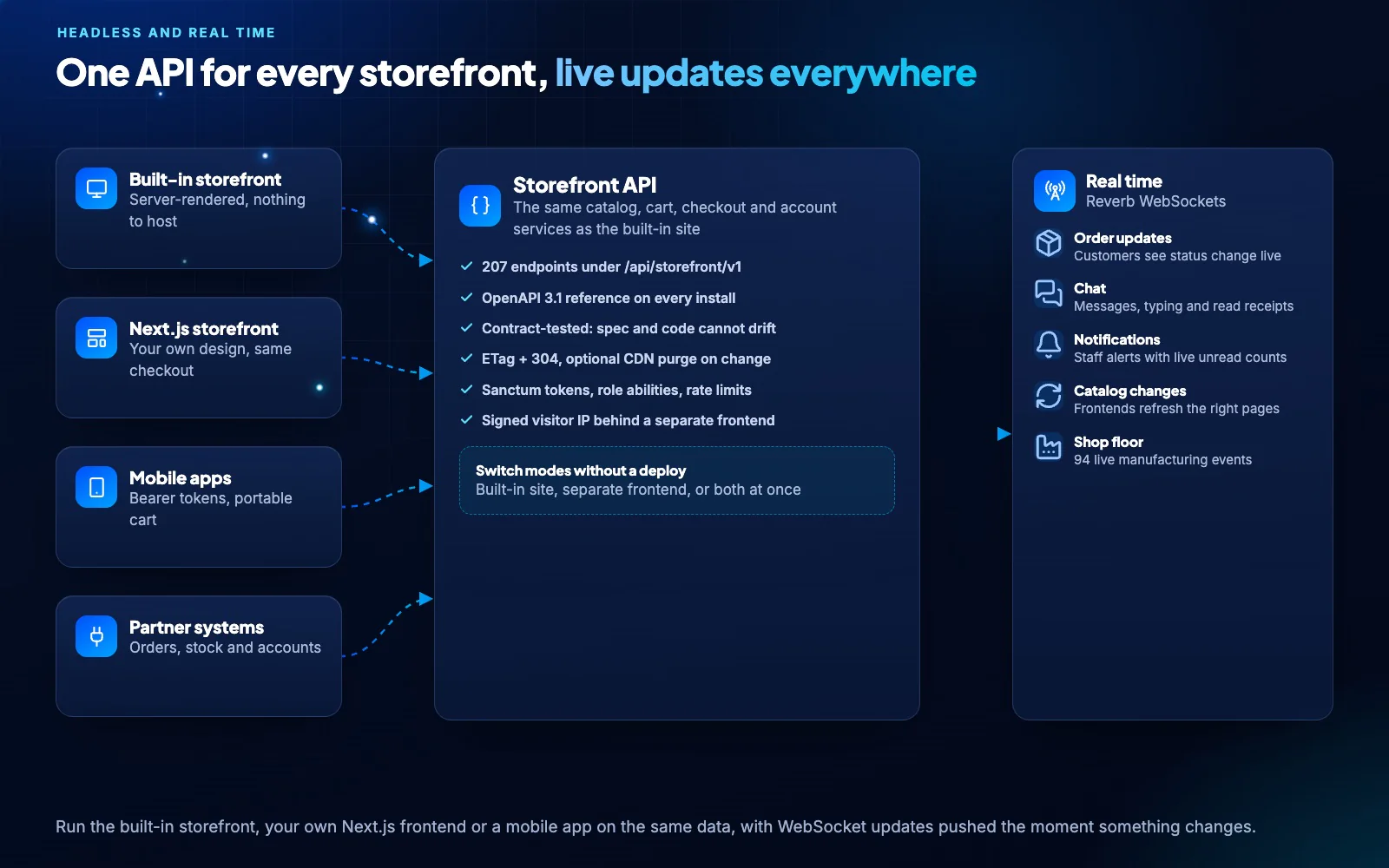
The built-in storefront, your own Next.js frontend and your mobile apps all use the same catalog, cart, checkout and account services. Reverb WebSockets push changes the moment they happen.

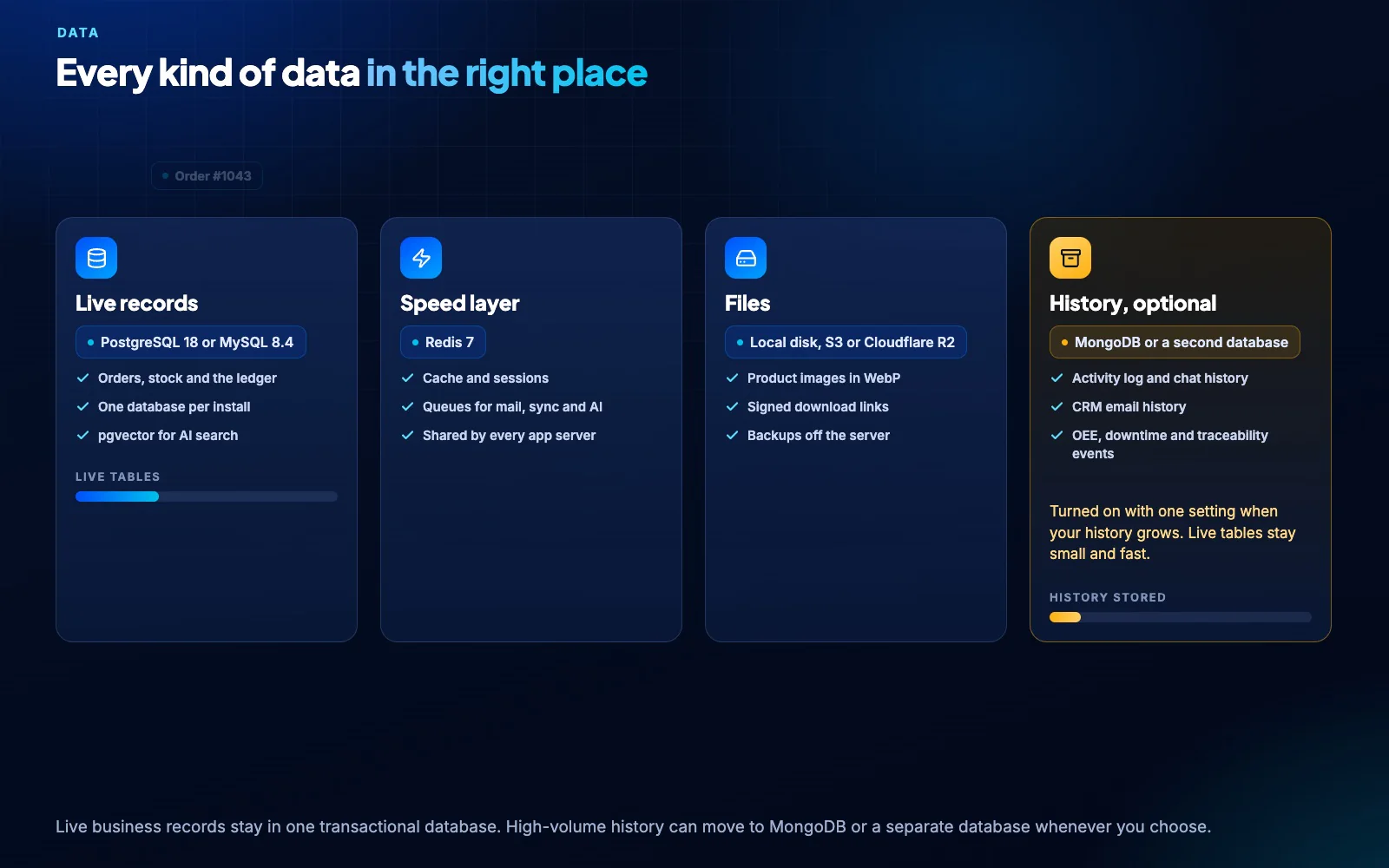
Live records stay in one transactional database. When years of history pile up, move the activity log, chat history, CRM email and shop-floor events to MongoDB or a second database with one setting, and keep the live tables small and fast.

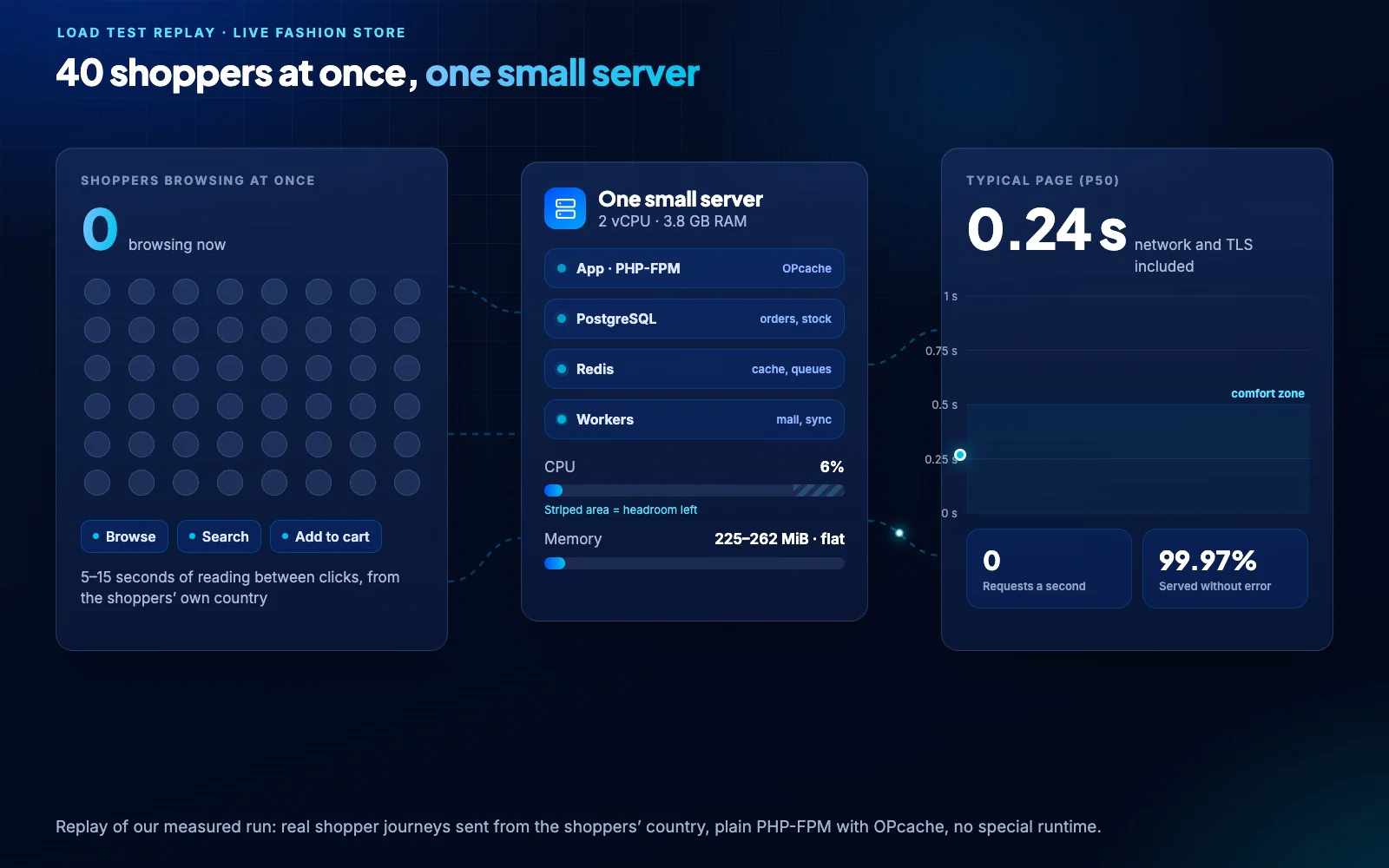
We load-tested a live store on a 2 vCPU server with real shopper journeys from the shoppers’ own country. A typical page took about 0.4 s with 40 shoppers at once, on plain PHP-FPM with no special runtime.

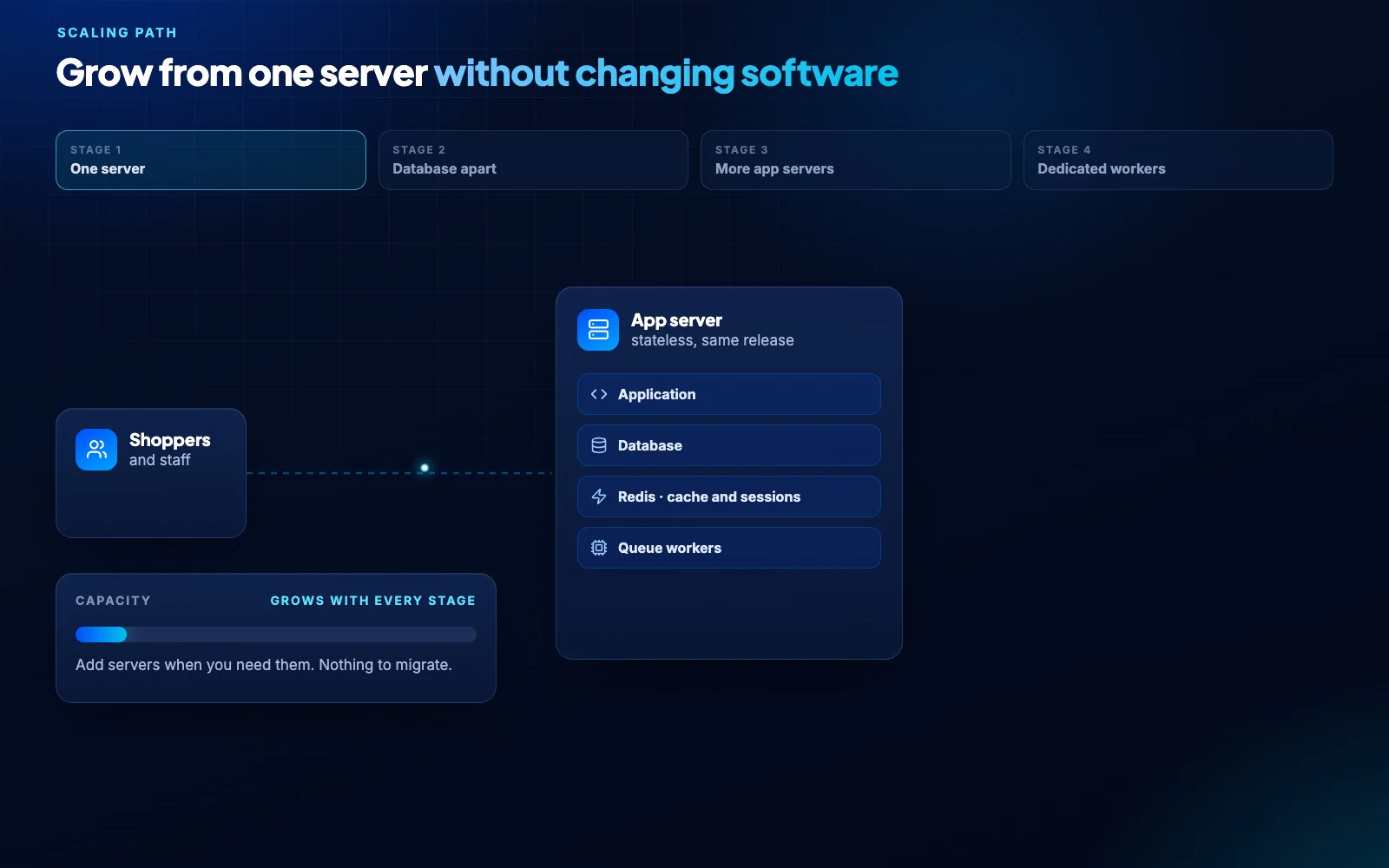
Start with everything on one machine. When the business grows, move the database, add app servers behind a load balancer and give background work its own nodes, all on the same release and data.

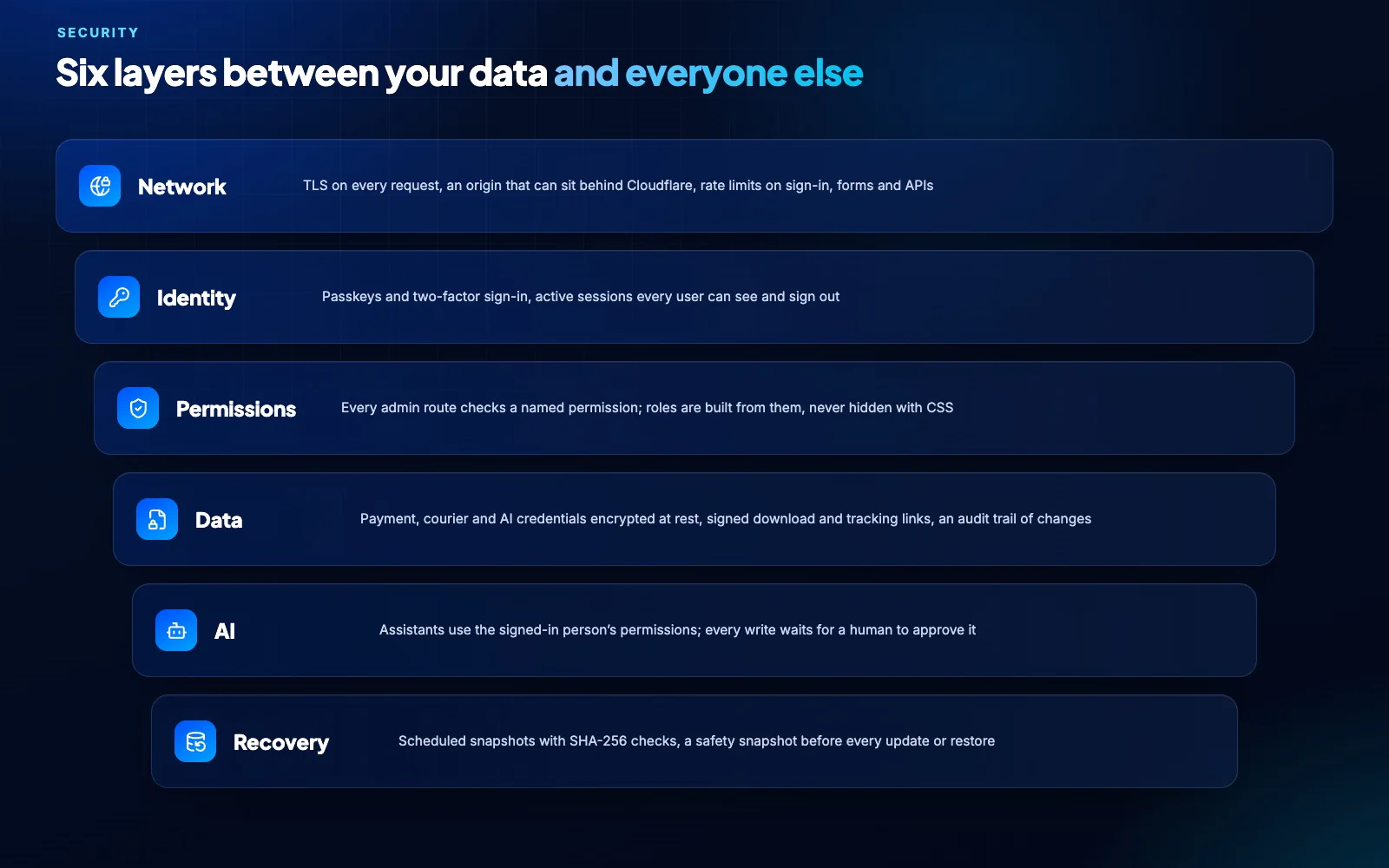
There is no shared cloud tenant to breach and no vendor copy of your records. Access is checked on every route, AI writes wait for a person, and recovery is built in.

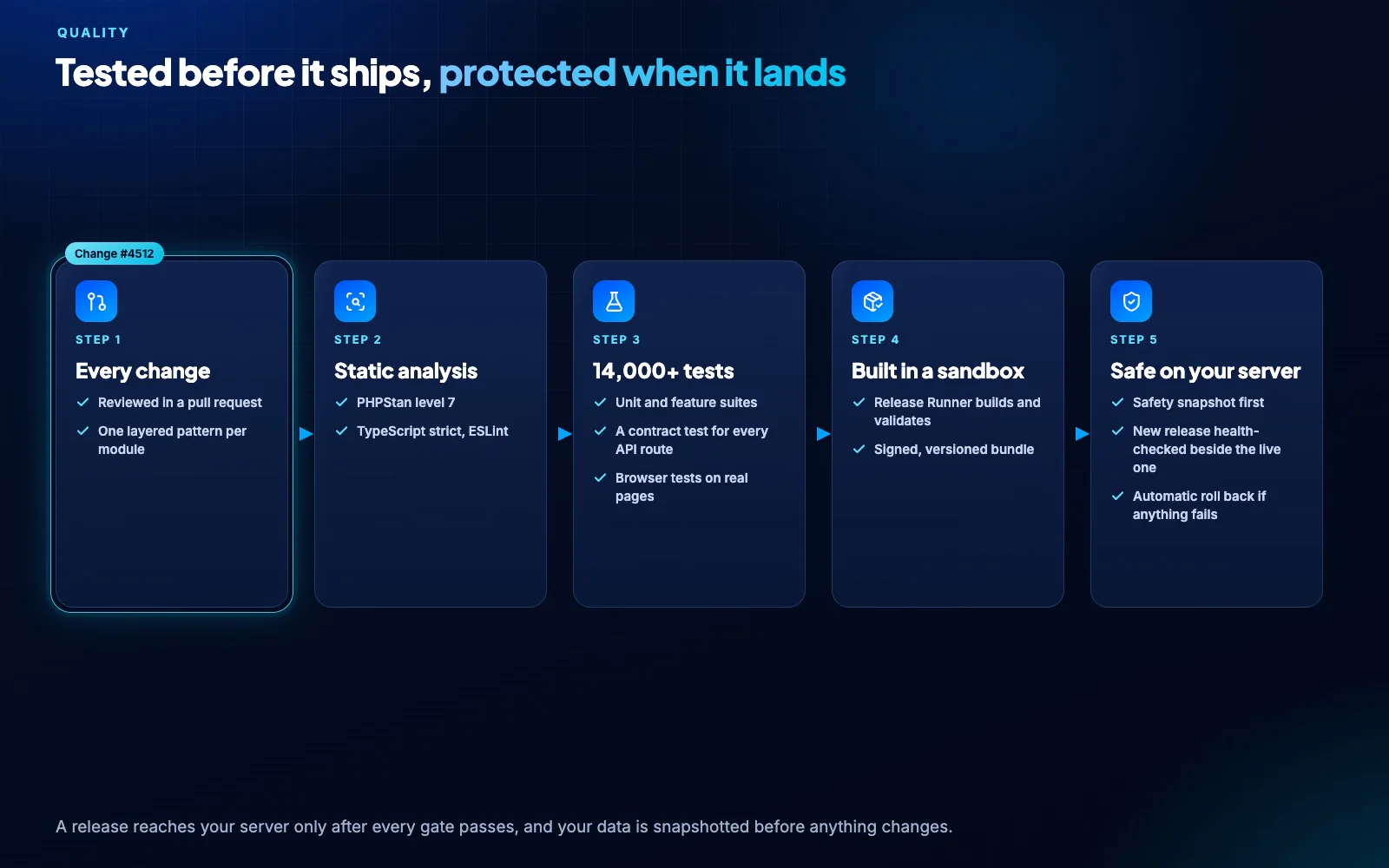
Every change passes static analysis and more than 14,000 automated tests. Releases are built and validated in a sandbox, and your server takes a safety snapshot before anything changes.

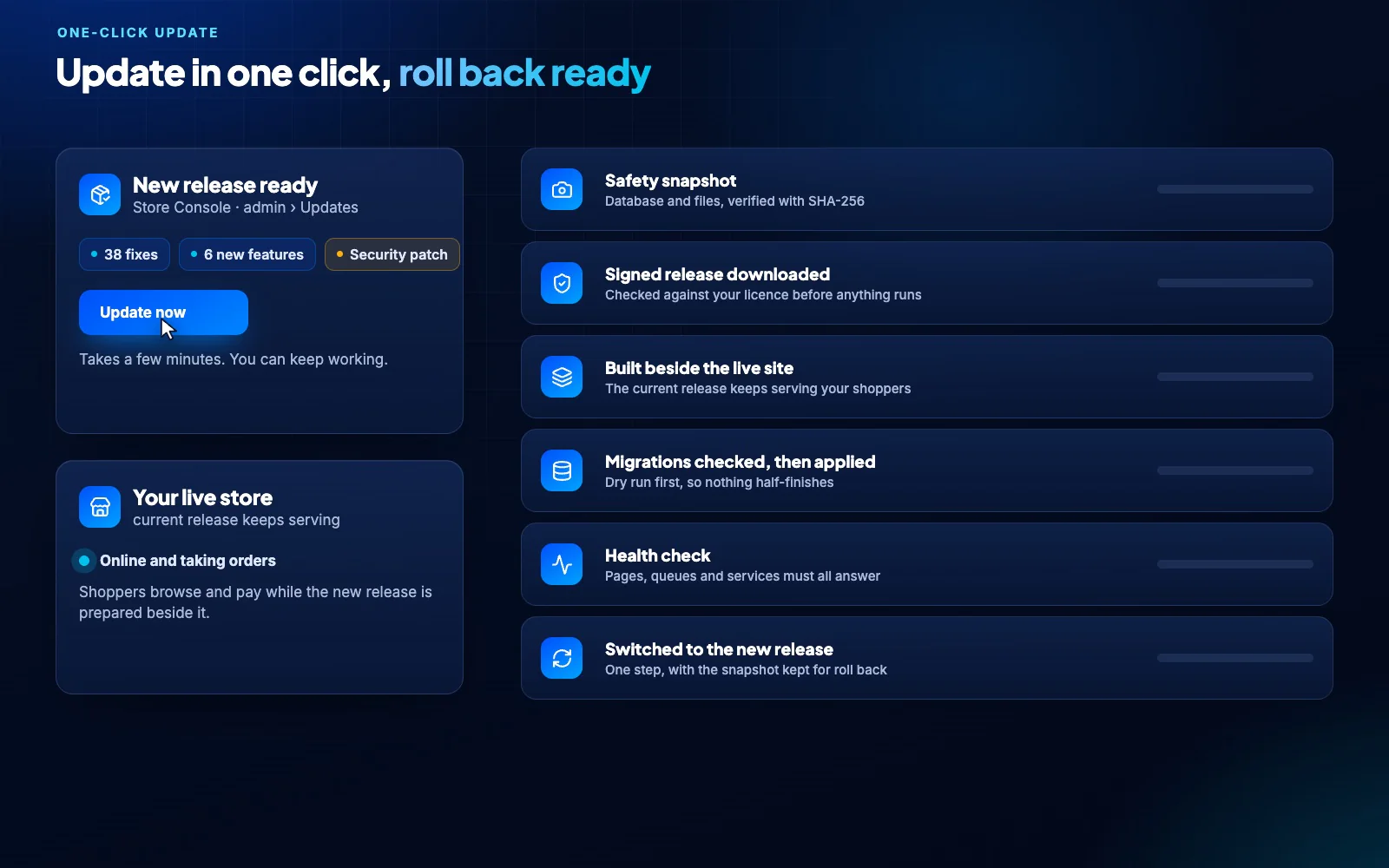
Click once in the admin panel. A snapshot is taken, the signed release is built and health-checked beside the live site, and it only goes live when every check passes.

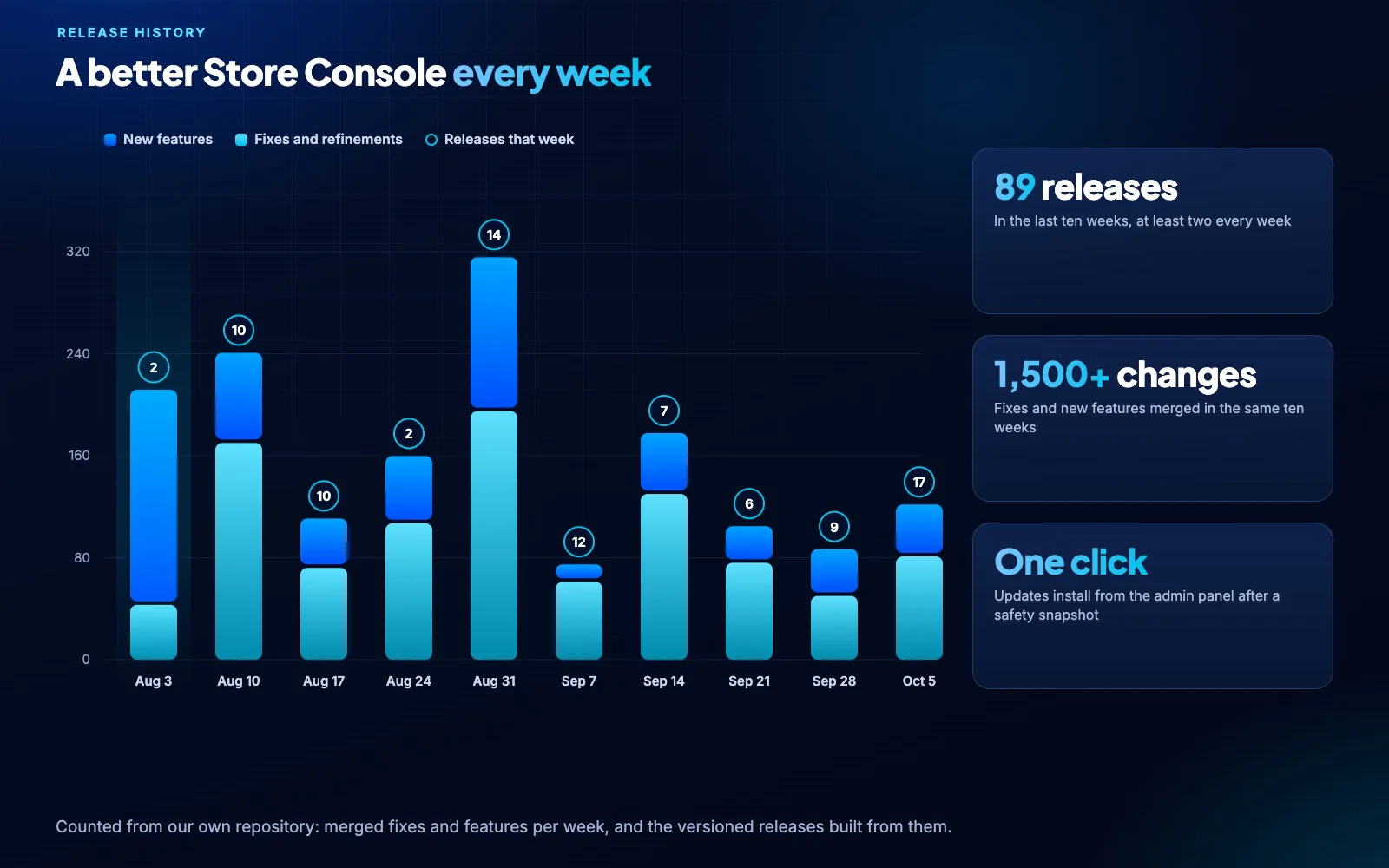
Fixes and new features ship in a new release every week, and every one of them installs from your admin panel with a safety snapshot first.

Any team that knows PHP and React can run, extend and audit it, and every piece is widely hosted and documented.
PHP 8.4 and Laravel 13 in clear layers: controllers, services and repositories.
React 19 and TypeScript with Inertia server rendering and Tailwind CSS 4.
PostgreSQL 18 with pgvector, or MySQL 8.4. Optional MongoDB for long history.
Redis 7 for cache, sessions and queues, supervised by Horizon.
Reverb WebSockets push live orders, chat, notifications and shop-floor boards.
OpenAI, Anthropic or a local model with your own keys, and semantic search on pgvector.
A versioned REST API with an OpenAPI 3.1 reference, a Next.js storefront and mobile apps.
Docker Compose on any 64-bit Linux, standard PHP-FPM, nginx with automatic TLS.
PHPStan level 7 and more than 14,000 unit, feature, contract and browser tests.
Buying software you host yourself should not mean being left alone with it. Store Console keeps improving, and the team that builds it answers your questions.
89 releases in the last ten weeks, carrying more than 1,500 fixes and new features.
Install from the admin panel. A safety snapshot comes first, and the new release is health-checked before it goes live.
If an update ever fails, Store Console restores the previous release and your data from the snapshot.
Email [email protected] or open a ticket, and get a clear answer from the engineers who build it.
Updates are never forced. Install when it suits you, and try them on a staging copy first.
Install guide, module guides and the API reference ship with every install and stay current.
For evaluation, 2 vCPU and 4 GB of RAM. For a live store with ERP, 4 vCPU and 8 GB. The requirements page has the full sizing guide.
Either. PostgreSQL 18 is recommended because pgvector powers AI search; MySQL 8.4 runs the same modules and migrations.
No. Our published numbers come from standard PHP-FPM with OPcache, so they hold on ordinary hosting with nothing special to run.
Yes. Set one connection and the activity log, chat history, CRM email and shop-floor events move to MongoDB or a second SQL database, while live records stay where they are.
Updates install from the admin panel. A safety snapshot of the database and files is taken first, the new release is health-checked beside the live one, and it rolls back on its own if anything fails.
Only when you connect a service yourself, such as a payment gateway, courier, email provider or AI model, and each one receives only what its job needs. We hold no copy of your records.
Yes. App servers keep no local state, so several can run behind a load balancer with Redis and shared file storage, and the database can move to its own server or a managed service.
Yes. Modules follow one layered pattern and talk through events, the REST API is documented with OpenAPI, and the storefront can be replaced with your own frontend.

Start a 14-day trial, deploy with Docker and keep every record on infrastructure you control.