Starting an Ecommerce Business: Orders, Delivery and Cash Flow
Connect ecommerce orders, stock, delivery, COD payments and customer care. A practical story with AI chat, Social Hub and room to grow into ERP.
Anichur Rahaman2 weeks ago12min

A story-led guide to using AI for relevant product bundles and customer loyalty—while protecting margin, consent and customer choice.
Author
Anichur Rahaman
This is a composite teaching scenario, not a reported customer result.
A small home and lifestyle shop runs a successful campaign. Orders arrive, but most buyers do not return. The owner tries a store-wide discount. Sales rise for a week; margin falls, and regular customers learn to wait for a coupon. The team does not need another blast. It needs a better reason for the right customer to come back.
Used carefully, AI can help a team notice patterns in consented, ordinary purchase data: which products are commonly bought together, when a refill or accessory may be useful, or which customers respond to a launch rather than a discount. It can draft a segment or bundle idea; people decide whether the offer is fair, available and worth sending. AI does not create loyalty by itself.
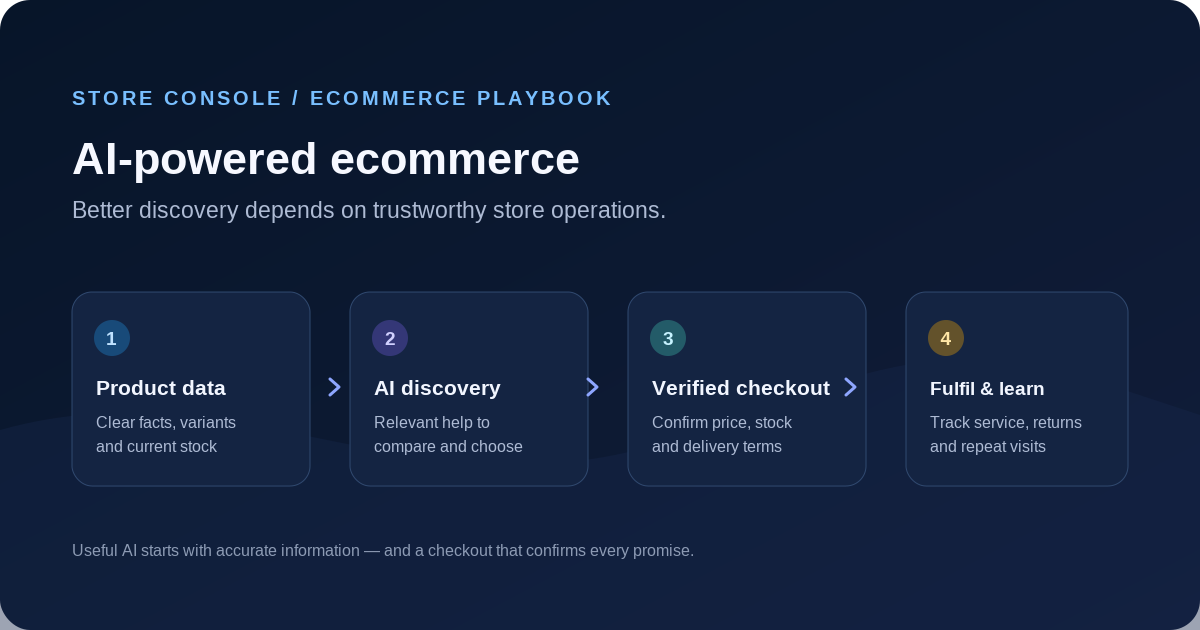
That is AI-oriented ecommerce in practice: AI supports a measured customer-retention plan, while people remain accountable for the offer.
1. Pick one customer moment. Start with a product people naturally replenish, a useful accessory, or a second purchase that follows the first. Set one goal, such as increasing the 60-day repeat-purchase rate without reducing contribution margin.
2. Use only relevant signals. Group customers by product interest and purchase timing, not sensitive traits. Respect consent and opt-outs. Keep the reason for a recommendation understandable to the team.
3. Make the offer useful before making it cheaper. Try a compatible bundle, a service add-on, loyalty points or wallet credit with clear terms. Check stock, fulfilment, margin and whether existing rewards can stack. A discount should solve a real barrier, not become the whole strategy.
4. Test a small, fair comparison. Send the offer to a limited group and compare it with a similar group that does not receive it. Review incremental repeat orders and contribution margin alongside average order value, returns, cancellations and unsubscribes. If the numbers worsen trust or profit, stop and learn.
Retention depends on connected work: catalogue and bundles, checkout, loyalty, wallet, customer records, orders and campaign execution. Store Console brings these commerce and back-office modules together; its admin AI assistant works with live business data and role permissions, while consequential changes remain subject to human approval. Enable only the modules you use and confirm the workflow before promising an automated outcome.
The local details matter. AI-powered ecommerce in Bangladesh may need to reflect a shop’s actual payment choices, courier coverage and customer preferences. Other markets have their own tax, delivery, consent and language requirements. Do not copy one market’s playbook everywhere.
A good AI-powered ecommerce plan makes the next purchase more relevant—not merely more frequent. Begin with one customer need, keep a person accountable, and expand only when both customers and business measures benefit.
About the Author
Anichur Rahaman
Continue Reading