How Discounts Affect Profit—and How Much More You Must Sell
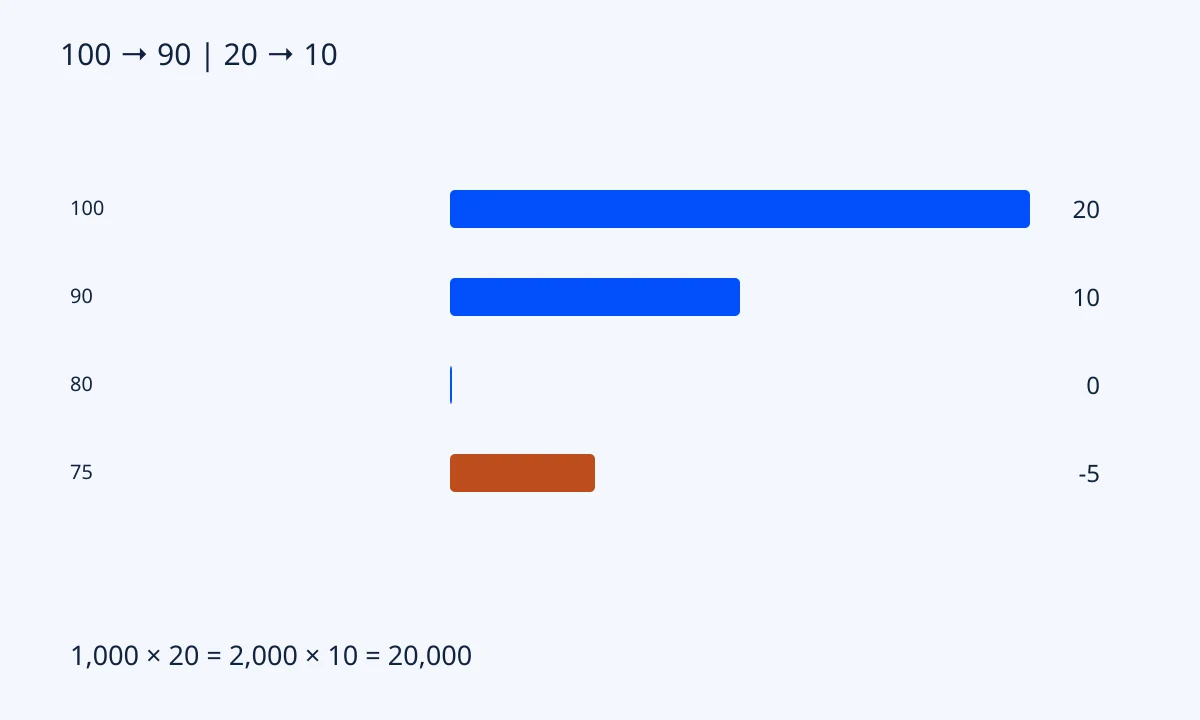
A 10% price cut can halve an order's contribution under stated costs. Calculate the extra sales required before choosing a promotion.
Anichur Rahaman20 minutes ago4min

A 100 sale can leave only 20 before fixed costs. Follow the order-level calculation, find missing costs and decide which sales are worth growing.
Author
Anichur Rahaman
Part 1 of 5
Selling More, Keeping Less?Illustrative business and amounts, not customer results or market benchmarks. All amounts use one example currency; replace the assumptions with your own records.
Daniel sells reusable lunch boxes online. Orders are rising, but the amount left for rent and wages barely moves. The sales report is correct; the conclusion drawn from it is not. A customer paying 100 does not give the business 100 to spend.
Contribution is net revenue minus the variable costs within a clearly stated boundary. It shows what the orders leave toward fixed costs and profit. It is different from gross profit, accounting net income and the cash already available in the bank.
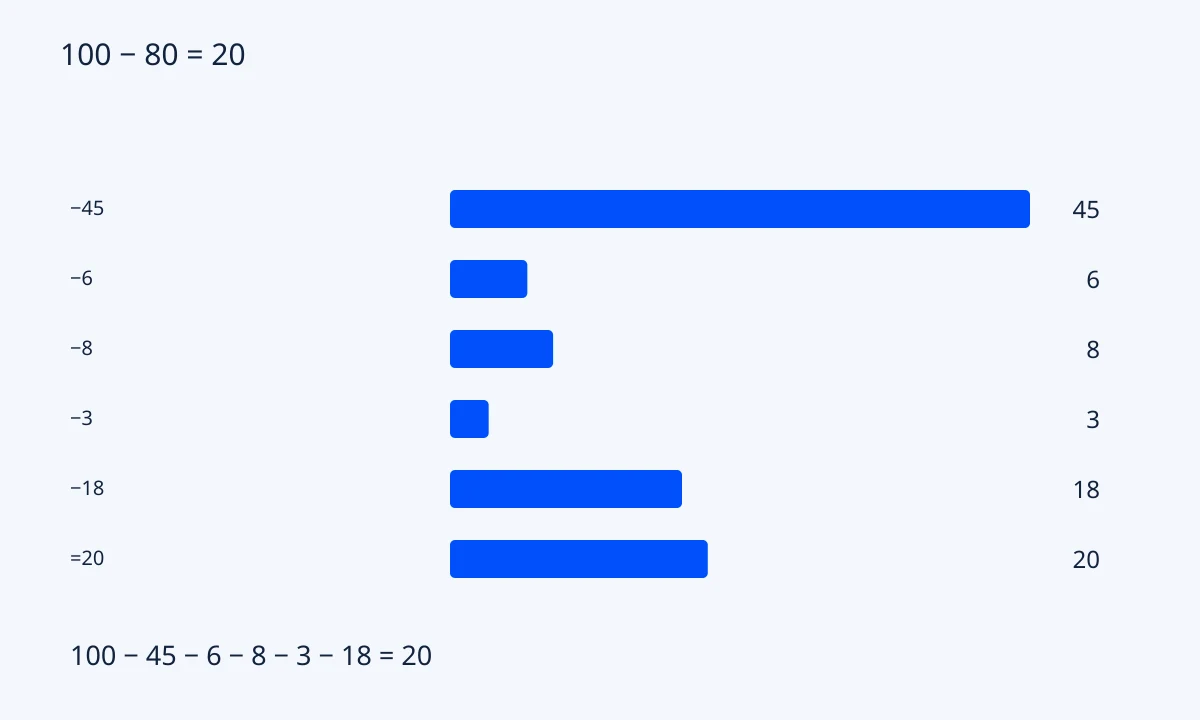
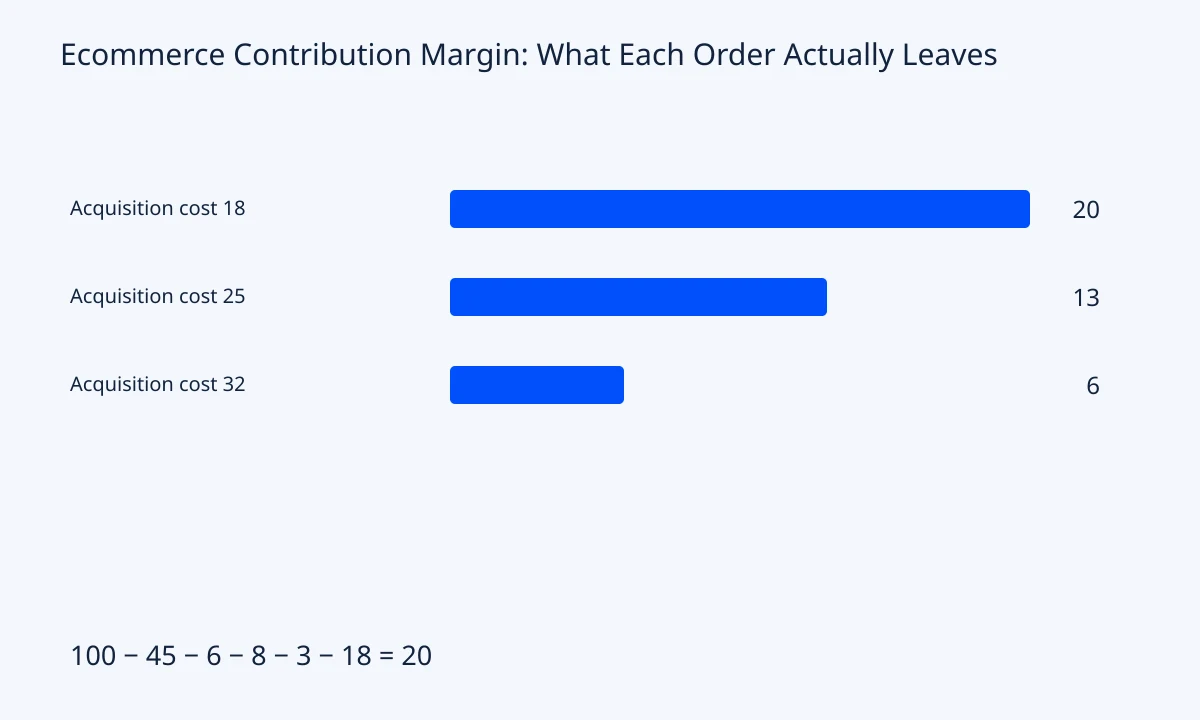
Use a 100 selling price excluding taxes collected for the authorities. The product costs 45, packing and handling 6, seller-paid delivery 8, payment processing 3 and acquisition 18. The listed costs total 80, leaving contribution of 20, or 20% of revenue. Before acquisition, the same order leaves 38.
This example has no refund, customer shipping charge or marketplace fee. Add those when they apply. If revenue already excludes a discount or refund, do not subtract it again. A courier deposit received net of fees also needs to be separated into its components before comparing it with revenue.
| What is included | Amount |
|---|---|
| Net product revenue | 100 |
| Product cost | -45 |
| Packing and handling | -6 |
| Seller-paid delivery | -8 |
| Payment fee | -3 |
| Acquisition cost | -18 |
| Contribution after listed costs | 20 |
For every line, keep the source, period and allocation rule. Product cost should reflect the appropriate inventory cost, not a supplier price copied after the sale. Decide whether inbound freight belongs in that cost and avoid counting it twice. Use actual package and carrier charges where available; mark estimates until the invoice arrives.
An 18 acquisition allocation is a modelling choice, not proof that an advertisement caused that order. Separate new and repeat customers where reliable data permits it. Use the same attribution window when comparing channels, and show a sensitivity case rather than presenting an allocation as an observed customer-level fact.
Compare contribution by SKU and channel before promoting the bestseller. A lower-revenue product can leave more money if it costs less to acquire, ship and support. Compare total contribution as well as the percentage; a tiny high-margin line cannot automatically pay the business's bills.
A later refund can change the original order cohort. Restocked goods are inventory, not an automatic full loss and not new sales income. Link the refund, returned item, unrecovered fees and any write-down. Our returns guide follows that process in more detail.

Start with one product and one complete week. Match quantities and revenue to the order records, reconcile fulfilment invoices, identify missing costs and label provisional values. Compare the result with the ledger under your accountant's policy; this management calculation does not replace the accounts.
In StoreConsole, the relevant Order, Inventory, Delivery and Accounting records provide operating evidence; Finance supports planning. Configure the modules and reconcile the inputs before relying on a report. This article's combined calculation is a worked method, not a claim that every allocation arrives automatically in one dashboard.
Write down one action: change the offer, investigate an expensive delivery zone or stop promoting an order that contributes too little. Then measure the next comparable period. More orders become a useful goal only when the economics can support them.
About the Author
Anichur Rahaman
Continue Reading